
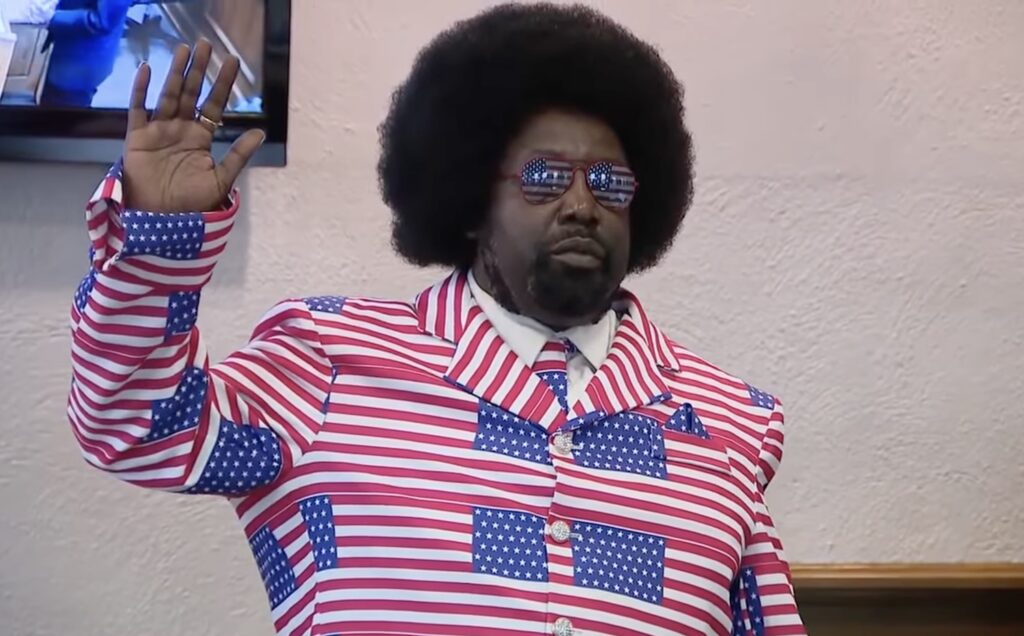
In 2022, a controversial police raid on the Ohio home of musician Afroman—best known for his 2000 chart-topping novelty anthem “Because I Got High”—sparked a protracted legal battle that has now reached a fever pitch in court. Authorities suspected Afroman of drug possession and kidnapping, yet the search yielded zero evidence, and no charges were ever filed. Rather than retreating, Afroman leveraged the incident, using his wife’s home video footage and his own security system recordings to craft viral tracks like “Will You Help Me Repair My Door” and “Lemon Pound Cake.”
The Legal Battle Over First Amendment Rights
The situation escalated when the officers involved filed a lawsuit against the musician, alleging that his use of their likenesses in his music videos was unauthorized. The case drew significant national attention, leading the ACLU to file an amicus brief in support of Afroman’s First Amendment rights. As the civil trial unfolds, the proceedings have become as theatrical as the songs themselves, with Afroman delivering testimony that is nothing short of remarkable.
Afroman Faces His Accusers
Afroman has continued to double down on his creative critique of the authorities. Most recently, he released the DIY funk track “Randy Walters Is A Son Of A Bitch,” which directly targets one of the officers involved in the original raid. The trial has already seen tense moments, including reports that a deputy became visibly emotional after viewing one of Afroman’s parody videos during testimony.
The Testimony of a Lifetime
During his own turn on the stand, Afroman maintained his signature persona, appearing in the same American flag-patterned suit and sunglasses seen in his recent music videos. His testimony was a powerful defense of his artistic output. He argued that the raid was fundamentally flawed and that, as a victim of an invasive police action, he was well within his rights to express his frustration through music.
“The sheriff was never supposed to have raided my house in the first place… If they hadn’t have wrongly raided my house, there would be no lawsuit, I would not know their names, they wouldn’t be on my home surveillance system, and there would be no songs, nothing… I got the right to kick a can in my back yard, use my freedom of speech, turn my bad times into a good time.”
The courtroom drama serves as a stark reminder of the tension between law enforcement conduct and the protections afforded by free speech. For those looking to understand the full scope of the testimony, full video coverage has been made available via public channels.